Every pantry drifts. A bag of red lentils slides to the back of the shelf, you buy a second bag because you cannot see the first, and by March there are three. A stocktake sorts that out in under an hour, and it is not about being tidy for its own sake: it is about knowing what you own so you cook what you have and buy only what you need.
The method below is deliberately plain. One checklist, a handful of categories, a few rules about dates and reordering. Do it properly once, then keep it topped up in minutes a month.
Before you start
Pick a time when you are not about to cook. Empty one shelf or cupboard at a time rather than the whole pantry at once, unless you enjoy eating dinner off the floor.
You need a damp cloth, a bin bag for anything past its use-by date, a pen and your checklist. Work in zones, and write the list in the same order as your shelves. Counting gets much faster when the paper matches the room.
Your printable categories
Use these headings as they are, or trim them to fit your kitchen. Under each one, list the items you genuinely keep.
- Dry goods: pasta, rice, noodles, lentils, couscous, oats, polenta.
- Baking: plain and self-raising flour, caster and brown sugar, cocoa, dried yeast, baking powder. Raising agents and ground spices go flat, so note the ones that smell of dust.
- Tins and jars: chopped tomatoes, beans, tuna, sweetcorn, curry paste, jam, olives, pesto.
- Oils, vinegars and sauces: olive oil, sesame oil, soy sauce, vinegar, mustard, stock cubes.
- Spices and seasonings: whole spices keep far longer than ground ones, so treat ground jars as a rotation list rather than a permanent collection.
- Breakfast and snacks: cereal, crackers, nuts, dried fruit, biscuits.
- Drinks: tea, coffee, squash, hot chocolate.
- Fridge and freezer: freezer bags benefit most from a date written on them the day they go in.
Add a location column. Top shelf, under the stairs, the garage shelf, the box in the hall. A second bag of rice hiding in another room is usually the reason you are doing this in the first place.
What to record for each item
You do not need an app or a database. Six short columns will do, and a notebook is faster than your phone when your hands are covered in flour.
- Item and size: 500g bag, 400g tin, 1 litre bottle.
- Quantity: count the open one too. "One and a half" is a useful answer.
- Date opened: or write "unopened" if it is still sealed.
- Use-by or best-before: the earliest date on the pack.
- Location: where it lives.
- Notes: half-used, decanted, nearly out, buy the bigger size next time.
Use-by and best-before are not the same
A best-before date is about quality. The food may be past its best but it is not automatically unsafe. A use-by date is about safety: do not eat, cook or freeze food after that date, even if it looks and smells fine. Follow what is printed on the pack, and check current Food Standards Agency guidance if you are unsure about a particular item.
Anything you decant into a jar or tub loses its original label, so write the date on the new container before it goes back on the shelf. A strip of masking tape and a marker cost nothing and save a lot of squinting at the back of a cupboard.
Low-stock triggers
This is the part that turns a stocktake into a system. Decide your triggers once, write them down, and stop relying on memory in the supermarket.
- The last-one rule: when you open the final pack of something, it goes on the list. No exceptions, because you will not remember in the shop.
- Par levels: choose how many you want to keep — two tins of tomatoes, one bag of pasta, three tins of chickpeas — and reorder whenever you drop below that number.
- The weekly-use rule: anything you use at least once a week gets a spare. Anything you use twice a year does not.
- A visible list: one sheet on the fridge door, or a note on your phone. Whatever you choose, it has to live in the same place every time, or it may as well not exist.
Write triggers as numbers rather than feelings. "Plenty" is not a trigger; "one tin left" is.
A pantry you can read at a glance beats a pantry you have to dig through.
Keeping it going in minutes
A full stocktake twice a year is enough for most kitchens: a spring clear-out, and an autumn one before the heavier cooking months begin. In between, spot-check a single shelf each week while the kettle boils.
Two habits do most of the work. First, rotate as you put the shopping away — new items to the back, older ones to the front, so dates get used in order. Second, add to the list the moment you notice something is low. That is the only moment you will remember it.
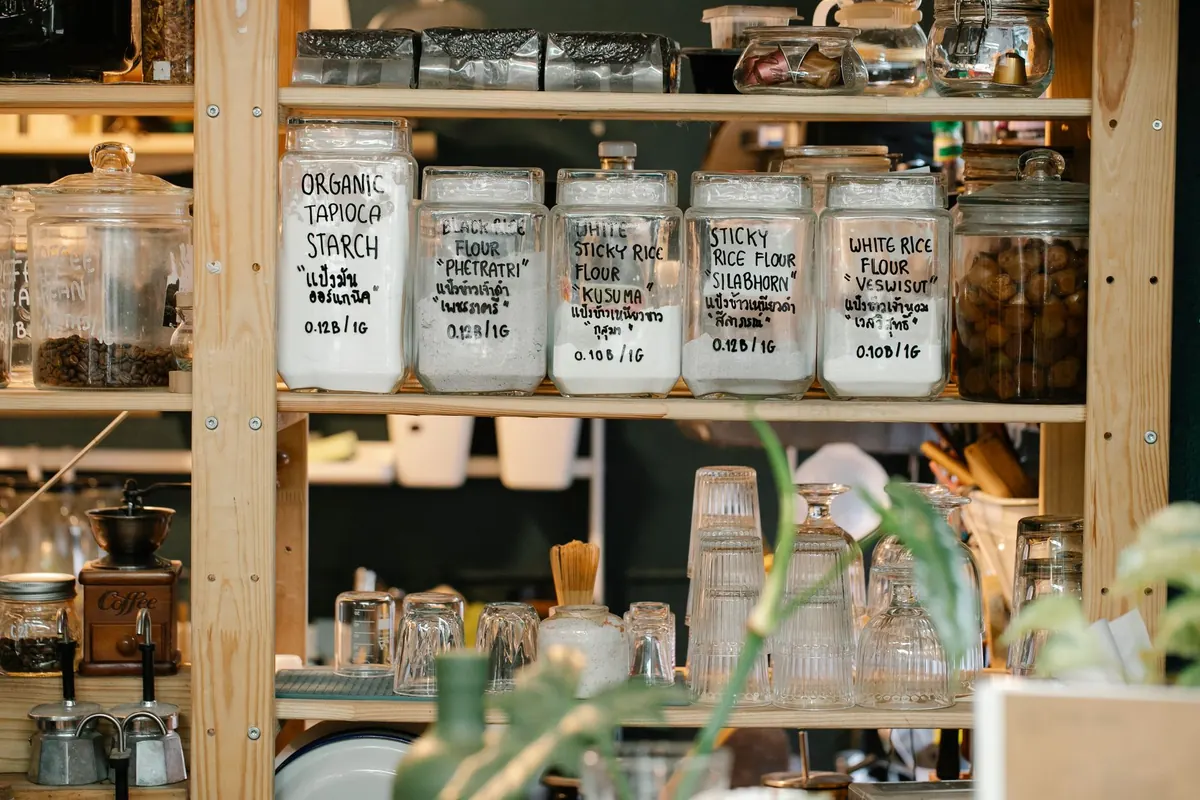
Once a shelf is sorted, take a photo of it. The picture works surprisingly well as a map when you are planning meals at the kitchen table, and it shows you at a glance how much room you have left.
Start with one shelf tonight
You do not need a free afternoon. Choose one shelf, empty it, wipe it, check the dates, note what is low, then put everything back oldest-forward. Ten minutes, one shelf, done.
Next week, take the one below it. Within a month the whole pantry is on paper, your shopping list is built from what you actually cook, and the third bag of lentils has stopped happening.
Photo: Sarah Chai / Pexels